Geological & groundwater setting
The anticipated sequence and thickness of strata, their lithology, weathering and saturation, together with groundwater levels and likely flow direction.
GROUND SOURCE HEATING & COOLING
A site-specific desk study of the geology, groundwater and thermal properties used to inform borehole-based ground source system design.
Discuss your site with Antony ↗PURPOSE OF THE ASSESSMENT
A thermogeological assessment evaluates how the geological formations beneath a site conduct and store heat.
For a closed-loop borehole system, the study considers the sequence, thickness and characteristics of the strata likely to be drilled. Groundwater levels and saturation are considered because they influence the thermal behaviour of the ground.
The resulting thermal estimates provide inputs for the specialist designer to model borehole collectors and assess their performance against the building’s heating and cooling requirements.
SCOPE OF THE STUDY
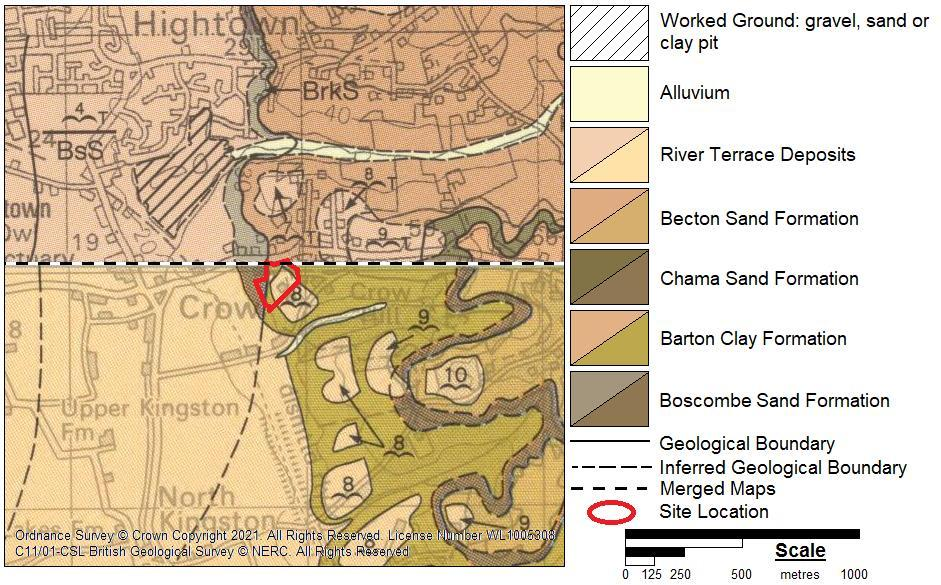
The anticipated sequence and thickness of strata, their lithology, weathering and saturation, together with groundwater levels and likely flow direction.
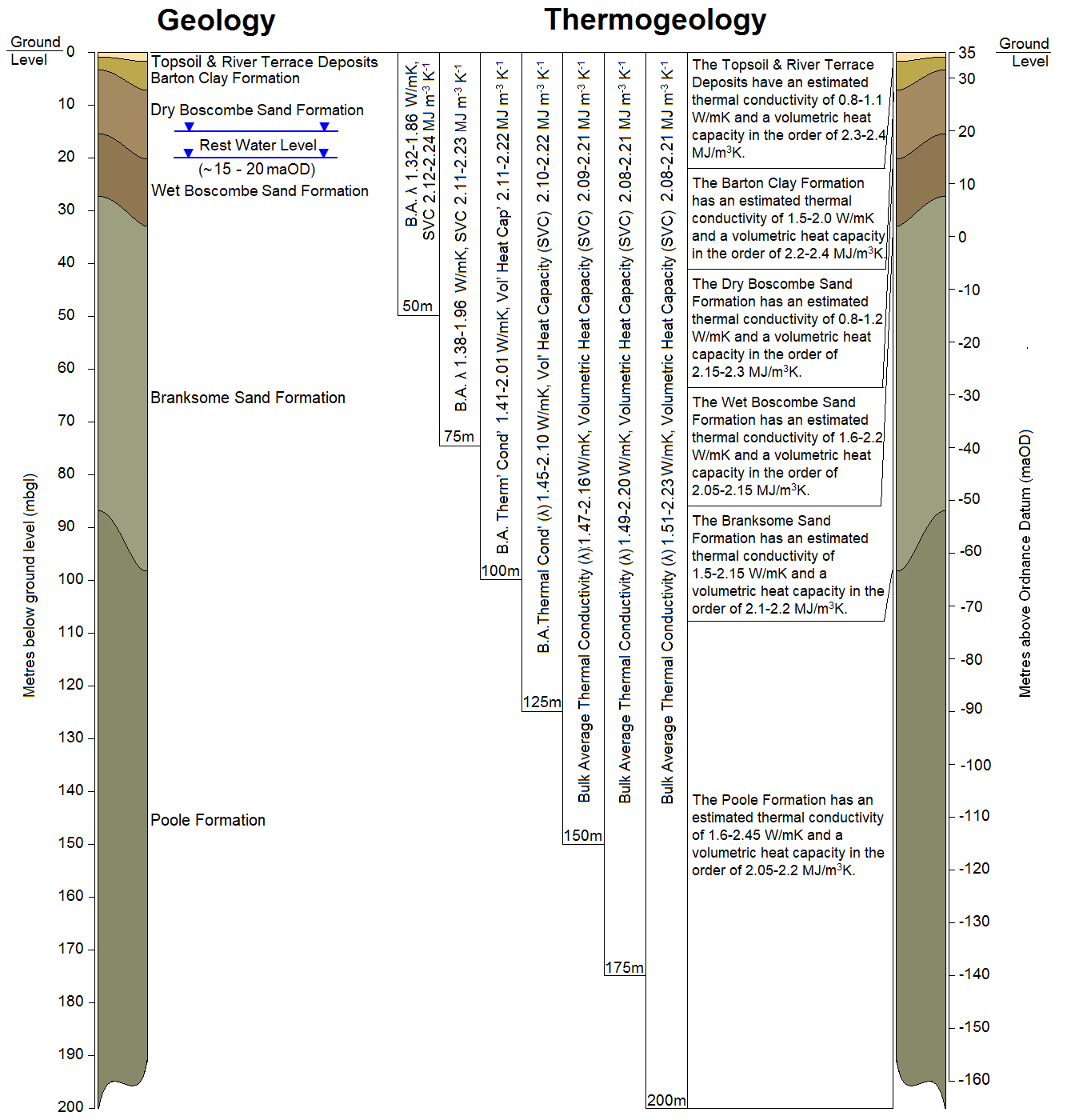
Estimated ranges for each geological unit’s ability to transfer heat. These reflect the ground conditions and the variability of the available evidence.
Estimates of how much heat a volume of ground can store for a given change in temperature, considered alongside thermal conductivity.
Bulk average thermal properties over a range of prospective borehole depths, with an estimate of ground temperature to support collector modelling.
The influence of groundwater movement on heat transport and potential thermal interaction between neighbouring boreholes.
Potential construction hazards and the need to refine the ground model through drilling records or, where appropriate, a thermal response test.
FROM THERMAL ESTIMATES TO SYSTEM DESIGN
A borehole may pass through several formations with different thermal properties. The assessment considers those units individually and estimates their combined properties over the proposed drilling depth.
These values support the modelling of collector length, borehole depths and array layout. They should be reviewed as the first boreholes confirm the actual strata and their thicknesses.
Where uncertainty is significant, a thermal response test can help establish the effective thermal properties of the installed borehole and surrounding ground.
A thermogeological assessment supports detailed design; it does not replace the building’s heating and cooling calculations or the final collector model. Where a project also requires a groundwater supply, the study can be combined with a hydrogeological assessment.
PLAN YOUR GROUND SOURCE PROJECT
Share your site location, available plans and heating or cooling requirements with Antony.
Discuss your assessment ↗